

Check out some of the past episodes we’ve covered on this topic:
- EP348: Gain An Edge On The Competition Through Content Marketing With Deanna Shimota | GrowthMode Marketing
- EP338: How To Create A Content Strategy That Works With Chris and Eric | Dynamic Duo Training
- EP334: How To Get More Downloads By Using Content Marketing With Stacy Jones | Hollywood Branded
You can check out our playlist here
Hollywood Branded Content Marketing Case Studies
- The Future of Branded Content Partnerships in Hollywood
- Scale Your Reach With Content And Events
- How To Create A Business As A Content Creator
The following content marketing case studies below provide even more insights.
The Path To Becoming A Certified Influencer Marketer With Hollywood Branded
Get ready to learn a ton of how-to’s and the tips and tricks of our trade, as you advance your influencer marketing game!
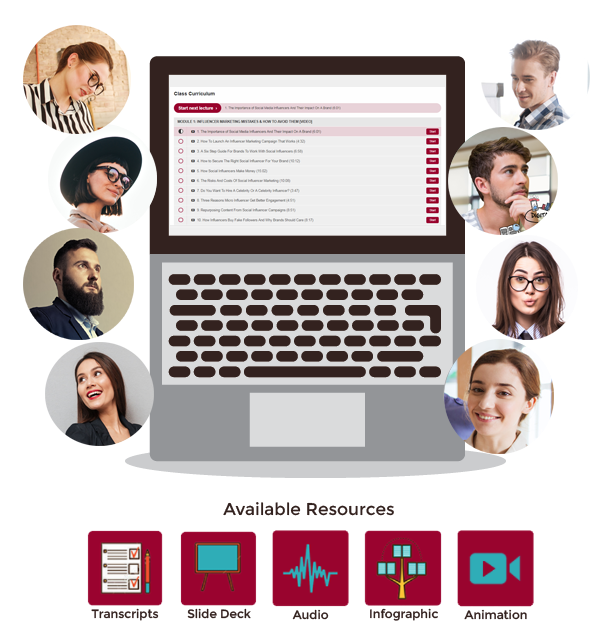
- Full-Length Training Videos
- Transcripts – Infographics
- eBook Guides
- Case Studies
- Hollywood Branded Surveys
- MP3 Downloads
- Animated Videos
- Additional Educational Material
- Quizzes & Exams
- Certifications In Influencer Marketing
Stacy Jones:
Welcome to marketing mistakes, and how to avoid them. I’m Stacey Jones and i’m so happy to be here with you all today, and I want to give a very warm welcome to John Azoni. John is the founder of unveiled, a content creation platform for colleges as well as nonprofits, and John and his team help higher education marketers, differentiate their schools through video storytelling and by creating massive amounts of engaging video content every single month on autopilot
as host of the Higher LED storytelling university podcast, and with the decades long career as a creative director. John has learned the importance of telling the most engaging and effective brand story possible through videos.
Stacy Jones: Today we’re going to be talking about the importance of content, creation, and how businesses can create turnkey systems to produce massive content that truly gets noticed.
We’ll learn what works from John’s perspective. Why should be avoided. And how some businesses just miss the mark, John. Welcome. So happy to have you here today. Yeah, thanks for having me great to be here, of course, that you have spent a lot of time creating content. And what i’d love to do is, have our listeners learn from you
how you got here today.
John Azoni: Yeah. Yeah. So I actually my my career. After college I went to Art School and studied painting and thought I was gonna be a gallery, artist and all that, and I do some of that. But I I I ended up venturing into a nonprofit world work for the United Way, and did outreach to the unhouse population in Detroit, and realize pretty quickly. I’m a much better a storyteller, content Creator, then a social worker, because I was, I was just a lot more drawn to their stories and then sharing those stories and through blogs and videos and stuff that we made. So eventually I left there to go do video. So I work for a production company, My, my buddies company for over a decade, and we worked with all kinds of all kinds of clients for profit and nonprofit, and did a range of of work. And so I’ve gotten to kind of see how a lot of we’re we’re a lot of people. We’re a lot of organizations. Get it right, and where they kind of veer off the path and and go down the wrong path. So so yeah. And then in years ago started unveiled and decided to focus on on higher education
clients and help them create kind of a content engine that just runs itself.
Stacy Jones:
So it’s not like colleges need to differentiate it’s not like people can’t tell the difference between them. It’s not like that. There are hundreds and hundreds of colleges. There’s no reason for them to try to tell their own story, right?
John Azoni:
Absolutely. Yeah. I mean, that’s a lot of what we talk about on our on my on. My podcast is just differentiating, because that is like the that is, I mean it. There’s I would say there’s so many. There’s only so many words that colleges can use, and really organizations in you when you’re in a particular industry, there’s only so many words like in the video industry. Everyone’s a storyteller. you know, and we’re we’re different because we tell stories. Well, every video company will say that on their website and colleges is no different. But the thing you know that that I talk about I work with my clients on is that it’s important to differentiate. It’s important to work with somebody that can come in from the outside and really help you see, like what are what? What is the culture of of what you’re doing here? What’s what’s resonating with students? What does make you different? But at the same time, and while that’s happening, just telling the stories that exist within your community will automatically differentiate you because nobody else, No other school in this case can claim those same stories. Everyone else can claim that they have small class sizes and great professors, you know. No one’s out, no one, no one’s out there being like our professors are okay. you know. But there, but but telling stories about the impact that the Professor had, or something would be a better way to say that. And no one. No other school can claim that exact story so. and I assume also, besides just the stories of on campus life and professors and students, there’s so much that is different between colleges besides their size, their location, what their emphasis is, but whether they’re on campus where they’re an off campus. I mean, there’s so many different things that I think most of us don’t think about unless we have children who are in high school and going into being college age, where all of a sudden there’s colleges all over the place that you didn’t even know about. Yeah, absolutely. I mean, there’s there’s there’s so many there’s so many colleges there’s so much to choose from, and it’s, and it’s I mean it’s is especially, you know we’ve got. We’ve got in the higher LED world. There’s this whole enrollment cliff coming where you know I I you know don’t have all the the data, but at a certain point, you know, back in the back, in like ,, ,. There people had less kids, and so less less. Students are entering college. And so a lot of colleges are kind of clamoring for attention right now to try to get ahead of that. But yeah, there’s there’s there’s so many colleges there’s so many. I’ve learned a lot Stacy Jones: and a lot of the colleges. Now also one of their other issues that they, i’m sure they have to deal with is a hybrid, whether it’s remote or on campus or hybrid classes, which is a completely different experience for students to be going through as well. That colleges have to explain their approach to that, too. Yeah, and that’s what we end up telling a fair amount of stories around the online experience, because so many students are skeptical about going to a school that’s fully on, you know, taking a fully online program because they feel like it’s they’re They’re not going to get the same interaction and stuff in the lot of the stories we tell really uplift the fact that, like they, the people that have been through the online experience, at least with the schools that I work with had their mind completely changed, you know, and they they They came in thinking like a remote. A remote experience can never be the same. And then, you know they’re they’re leaving with like. Oh, my gosh! That was! That was great.
Stacy Jones: So how does your team approach this like? I know you provide a whole turn key system. But like when you’re sitting down with the university or college for the first time, how do you figure out what the best approaches and map out what they’re going to need to be doing in order to facilitate creating massive amounts of content.
John Azoni: Yeah. And when I say massive, you know. I I think it’s more. It’s more in what we what we do is we we create a we have a subscription model that’s we tell stories in a year, and so we bat shoot a year’s worth of content. And then every month we we we drip out a new package of videos. So that’s one full length story. A couple of shorter cut downs, you know, for for social media, and then some other like stuff repurposed from the from the interview. So over the course of the year it’s a videos, and it’s a it’s a it’s a turnkey approach, and the reason we do. That is because the video is is so. It’s it’s so important for any organization, higher LED or or anyone else to be engaging with video regularly, consistently, but it’s it’s it’s If you don’t have an internal video team, it is a lot of leg work to to hire a a of a video vendor, and then heard all those cats, you know. And then at the end of that you get one video. So I you know, and and that’s fine you should have. You should have, you know, a brand story, you know, if you’re a for profit nonprofit, you should have a brand story. You should have, maybe a video that’s more informational in nature. But then, where we kind of focus is more on what’s the day to day, storytelling and day to day content, churn, going to look like, let because that’s the stressful that I feel like that’s the stressful part. You can manage. A few video projects PE bigger projects across the year. But when you’re constantly waking up like, what am I going to post today? You know, you know, having that stuff at the ready is is helpful. And so what? And in the course of our creating with with schools, you know, we’re filming a year’s worth of content. We’re giving them all of that footage and and all the B role and all the interview footage. And that’s where we we kind of talk about. This is we’re building a like a massive content library for you that has a lot of potential for anyone that can go in and grab a clip and make a tik tok out of it, or, you know, throw some text over over a video and and and make a real or anything like that, using using your own, your own footage, instead of having to rely on stock footage and things like that. It’s it’s it’s, it’s. It’s important.
Stacy Jones: It is important, plus you know, having your own footage. Make sure that you have clear footage to use, and no one will ever come after you for that.
John Azoni:
There you go. So what are the some of the issues that you see time and time again, like? What are some of the generalities where maybe there’s a lack of understanding or a lack of knowledge that you here you here on an often basis. Yeah. Well, I think there’s just a big misunderstanding about what storytelling is, and and because it’s a bu buzzword, it it gets used so often to really, just like, I think a lot of organizations say, Well, we created a video. So we told a story. No, you didn’t, You know you a story is a story. You know you. You wouldn’t. You wouldn’t tell your friend, hey? I got a great story to tell you. You know we’re great at this this and this, and here’s why you should come to our school and this and that’s that’s an information dump, and your friend would be like, Where’s the story? So? And I think, and you know I worked with so many organizations outside of higher education throughout my career, and that is the pattern like over and over and over again of you know what our clients will say like we, you know, we want. We want to tell stories we want to like really kind of connect with with our audience emotionally. And then what they end up doing is pushing the project towards. Here’s a dump of information over an inspiring song. and and and that’s so. That’s kind of where we differentiate. And I and I think that those are great videos. That’s that’s part of a storytelling campaign, because you need information. You can’t just be lofty all the time. You know you you do need to inform, you know, people. But but what we need to kind of re-center and go. You know what a story is you know Right? Free: yeah, yeah, yeah. Marketing, talking points. Here’s all the reasons why we’re great is is that’s the temptation is, we’re If we’re gonna make a video. We might as well say, Why, we’re great, and you know. But that’s really making the organization the the hero, and and really like in storytelling. It’s about making someone else to here, or making your your customer, your your audience, the hero, because they’re the one that holds the story and the experience that that you’re that you’re you know, kind of bringing people along on this journey. So yeah, I think that’s where that’s where a lot of all organizations go wrong is is kind of approaching storytelling from a perspective of okay. We checked the box because we got someone on camera saying whatever, and then we put it over a nice song. So. and as you said, that’s all organizations. Well beyond higher education, that is, every single corporate. a corporation in America, small mom and pop company anything along those lines. Everyone makes the same errors for storytelling. absolutely. And I think when you, when you approach video marketing from a we’re just gonna do a few videos in the year, and you’re not approaching it from a content perspective. That’s where it’s. It just makes sense that people would want to go. Okay, If we’re gonna make one or or videos throughout the year we want, we we need those things. We need those videos to serve a lot of purposes. and but and and so say you were to, You know we I talked to clients a lot. They’re like we we want to do storytelling, but we can’t find like one story that represents our whole brand, and that’s where I go. Of course not. You know you have to. You have to kind of fly a lot higher with with a big brand story like that, and and think about a larger thread that that carries through all of your marketing. But when it comes to creating day to day, consistent content, that’s where it’s such a great opportunity to be consistently telling, compelling stories and staying in front of your audience day after day with little bits of content. Little touch points. And that’s where that’s where I think people can wrap their head around where to fit storytelling into their marketing strategies.
Stacy Jones: So how do you go about doing that? How do you figure that out?
John Azoni: How do we figure out what is the nuggets
Stacy Jones: of? You know the big idea of how to approach and build that story like how are you figuring out? You know. Is there a process or a system when you’re sitting down? Is there a way when you’re saying okay, i’m not supposed to talk about my marketing messages. I’m not supposed to do fa cues. I’m so to find this like wonderful thing that’s feel good and will resonate, and it’ll gauge. It will touch people, and everyone will want to come to my organization after that. How do you start that?
John Azoni:
Yeah. And that’s a great question. And it it really is a. It’s a concept that I call arriving at the brand through the back door, and it’s it’s it’s finding something that’s other. Some Some other thing that we can talk about that. Can that can or help us arrive at the value of your brand rather than going straight for here’s the value of our brand. So. for instance, you know, say, say it’s a you know, in in my world in Higher LED Online school. It’s a it it’s, you know. a story of a i’m a single mom, and she’s got a few kids, and and she wants to be a good example for them. She wants to level up in her career, and she wants to go back to school, and she wants to show her kids that. you know they can. They can set. They can try really hard, and they can. They can, you know, pursue their goals, and they can achieve them. So she does that. And she has a full time job. And because of the online, you know, environment, she’s able to put the kids to bed and then do her classwork and and and she’s able to fit it in on her time. So that’s like a way, you know. That’s a way of like we’re telling us a real story of You know somebody wants something, but they have, you know, hurdles in their way, you know. But then but then here comes your brand to kind of help. Alleviate and get them over those hurdles, and that’s that’s kind of the positioning that we that we encourage any organization to take is is really just fine fun. Things find something else that we can talk about. I worked with a food Service organization a number of years ago, and we did a case study on one of their clients, and they they come in and do like work. Workplace. gourmet, food, you know, food, so they have like, instead of a cafeteria for their you know, employees, it’s like you can get these like format meals. It’s pretty cool. But what we we all want. Yeah. So what we did with that we went into it was the automotive supplier. and instead of just saying, Here, you know, here’s here’s the kind of food we serve. Here’s why it’s great. What we did was tell a story about employee retention. you know, because because food plays so heavily into employee retention, and and when employees feel like they’re taking care of, and they feel like they can go down to this common area and eat a great meal with their with their fellow employees. It builds community, and it helps keep. Keep keep employees from leaving. So that’s that’s kind of that other thing. And of course we got around to talking about. Here’s how you know the organization. the Food Service Company really excels and is a good choice. But but we we got there kind of through the back door.
Stacy Jones:
and so you get there through the back door. What do you have to do then? Do you sit down and do script everything out? Do you interview? Do you do an outline? How do you prep for the storytelling experience that you’re going to be capturing?
John Azoni:
I think it’s really about. I think the stories kind of tell themselves, and it’s really just about having a culture in your organization. Any organization of collecting stories you should always be on the on the lookout have your ear to the ground. For where are we making an impact? And and and where is there like an emotional component that we can, that we can communicate that from.
John Azoni:
So yeah, and and and I think when when you, when you have a a a, a a list of stories, you can look at of them as being like. Oh, my gosh! That that gives me chills, you know. I can imagine that being a blog post or article, or a video or whatever, and then it’s, and then it’s just letting them, you know, tell that story. I mean, if there there’s different ways of formatting it. And you know you could. You could do the more journalistic approach where you’re kind of narrating it and then plugging in some quotes from them. If it’s. If it’s video, it could be, you know, a little more more scripted I. I first. When it comes to like, just day to day storytelling. I I authenticity really shines. And so really just letting letting the the subject of the story shine and tell their own story. So for us it’s our Our work is all interview based. We we do commercials and stuff like that. That’s just a whole different category of like scripted, you know, high production. kind of content when we when we talk about storytelling, it’s all we’re sitting with a student, and they’re they’re telling us their experience.
Stacy Jones: And how long does that usually take to get a story and to get good content and to capture it all. How long is the session?
John Azoni:
So what we do with the subscriptions is, we shoot one. We’ll shoot stories in a day, so we’ll we’ll shoot for full days of production over the course of the year, stories a day. That’s that’s stories. That’s one story per month. If my math serves me correct, and so so we will spend. We’ll typically show up. We like to do the interviews first, so we’ll we’ll take, you know. For instance, we just worked with University of San Diego. We had a a young lady. Her name is Carmen, who was like a immigrated from her family, immigrated from Mexico, and and she’s doing great things in the business and marketing world at at University of San Diego. So we sat with with Carmen, for you know the first hour got her story, and then kind of started to think about. Ha! What kind of other like, you know, be role footage b role being the footage that goes over top of you know the person talking. So you’re not just seeing them talking to the camera the whole time. But what really what really helps us to kind of plan for a great production is to do a pre interview, and so that’s how they do it, You know, if you were to go on. I was I was gonna say, Oprah, I don’t think Oprah has a I will tell you as an example. We have clients who are go on our interview this week alone. We were supposed to have someone go. Do that before the Hollywood strike. Now, you know, when this podcast was just shot.
Stacy Jones:
But there’ll be a pre interview segment. So just same thing. Talk shows new shows. Whenever we’re doing something for clients. There’s always a pre interview to find out what the juicy bits are
John Azoni:
Right. Yeah, and so we we, and there’s always so much revealed in those conversations just a casual phone call with with in my case, the student in other industries. I’ve worked with. You know. It’s it’s whoever we’re at gonna interview each person we pre interview. Just so we know we run them through the questions, and we always find something else that’s more compelling than we than we thought we were going to find. You can sit down with a blank piece of paper in a in a general concept of this person and their story. But it’s not until you really get in and start talking to them as we are, you know right now where you go. Oh, that’s that’s a really interesting angle. I worked with a real estate company several years ago. and we did a whole workshop, creative direction, workshop. And we were, they, they kept saying, we wanna we want to do this differently, because here’s the videos that all reelers make. They make these like just talking to the camera. Just you know the here’s here, you know, talking about like I don’t know, lending whatever there there’s just kind of like a template of real estate videos, and they wanted to do something more more emotional. And so, after a lot of talking, we their brothers. someone said something. One of them said something about their dad and and and and growing up with their dad, and and what an influence he had on them as people, and that’s kind of the angle we were trying to do is like, how can we get? How can we get their customers to connect with them and get to know them as people, and we get to know their value as humans. And so that became the thread. We we created a whole commercial around their relationship with their dad and growing up, and how that has impacted their their real estate business. So that’s in that. If we had just taken if we had just so. Well, there’s let’s just go in. Let’s just roll the cameras and start talking. So this much, and houses. Then this is their number of houses that so you like to work with Don and Dale right? Exactly. That’s if if we had done that, that’s the kind of video that we would have ended up with. So it really is about just being being conscious of where the stories exist. And I think. even if you don’t have it like the time, the time when the time to find stories is not when you need them, like the the time to find them is long before you need them, so that you have a bank of ones to choose from, because what I notice with my clients sometimes that that haven’t been connect collecting stories. This first time we start working together is the first time that they’re really going out and trying to find like, how are we going to find of these people, and so they’re asking professors, and they’re asking department heads and a lot of times. You know the you know. They’ll get back stories of students that are just like like the School stars at a great experience, you know, and and it really isn’t until you really just have different kind of conversations, like really like ground level conversations with individuals within your midst, that you really start to uncover something deeper. Then it was great, and you should buy it
Stacy Jones:
Good. So after you’ve done this, and and this would apply for everyone, you have awesome content and a ton of content. I’m sure from the interview segment. At least you have a solid interview. You sat down with someone.
John Azoni:
My next assumption would be that you’re gonna take that content and repackage it so that you have your long form video. And then you’re also creating social content, because every piece of video you ever make can be recreated into massive amounts of content and extensions. Absolutely. I’m a big fan of repurposing content and not wasting your work. you know. And so I you know probably % of clients I’ve worked with Will, will, you know, over the over the past, you know, over a decade we will shoot. We’ll put all this money into into filming this footage, and they, and then they never ask for the footage. They don’t have any plan for what to do with the footage after we do this one video, and it’s kind of just like, oh, man, there’s so much stuff here that could be like a different little videos, and you didn’t have to go hire a company a times, you know. So and so that’s that’s really the value that we try to in, in, in part, on on our clients is kind of try to get them in the habit of like, sure. We’re gonna create a lot of polished videos for you. We’re gonna create a full link story, a couple of cut downs. And then we’re gonna take segments from the interview that are talking about. You know, scholarship, opportunities or career, development, opportunities and stuff like that. But there’s so many other ways, like so many other things that we you could pull out of that interview. and then even just taking the the footage that that we or the the Polish videos that we give you, and then cropping them vertically and turning them into Instagram reels, and Youtube shorts and and things like that, and getting a lot more reach kind of like horizontal reach across several platforms that way rather than just investing in one video. It’s it’s min long. It will never fly on Youtube shorts or reels, or anything like that, and it’s horizontal, and you’re just gonna try to stuff it wherever you know, wherever you can. So yeah, it’s, it’s yeah, just have it having a having a. A. To get potential content, I think, is is important.
Stacy Jones:
And so how can people learn more about you and your company? Where should they go?
John Azoni:
Yeah, we are at unveiled that TV, and you have to spell unveiled wrong to to get it right. It’s you N. V. Ild. And so we have. We have some more information. We have a pricing guide that tells you all information about how how you can a higher us for one of our subscriptions, and how those work. And then, though but those can you, that same model can apply to any type of organization I’ve done? You know we’ve done packages of of stories like that for physical therapy companies, and do a series of stories for the State of Michigan on car accident. You know, accent survivors when they were changing the the no fault insurance laws here in Michigan. And so the it’s the same approach. It’s really just about finding good stories, telling them, and then packaging in a way that you can get a lot of reach out of them and then giving you all the footage. So
Stacy Jones: so yeah, you can learn how we do that at our on our website, on bailout TV
John Azoni:
mistakes, I think I think I mean. And I said, like I said before, I think the mist. The mistake is waiting till you need good content to try to find the good content, and then and then the other. The other thing is not understanding the difference between storytelling and just creating an informational video. I think it’s it’s helps a lot to understand why storytelling is so effective, because when when you are telling an actual story, there’s things going on that you couldn’t even believe in your brain or you’re You’re like You’re You’re imagining this story playing out. You’re literally like your brain is firing in the same ways that the the story is, you know. So if someone hurts their arm, your your your your brain is firing in that in that, in that, in that way, you know you don’t feel it. But but you really there is such a deep level of engagement when you are transported into a storytelling world that really just creates such an emotional dent on on you, and and reflects back on the brand. And so that’s I think it so. If you think you’re doing storytelling. But you really just communicating a bunch of information, you’re not accessing all the power of what it, what it benefits you to transport somebody into another person’s journey just like you would sit down and watch a netflix show that. That’s what you you get hooked to that like no one, no one just like Binges marketing videos, you know. But they do binge stories. you know. So. Yeah, and I think that’s a great example. I mean, you’re sitting at home, and you’re watching a production. If you cannot feel like you can step in and immerse yourself in that world and become part of that, and you cannot actually tactically see and feel and understand what you have actually entered. And it’s just something that you’re
Stacy Jones:
Absorbing facts. Instead, it’s a very different way of engaging someone
John Azoni: Right? And storytelling, I think to I think, too, is another mistake is that you know there’s a there’s a the the concept of the marketing funnel where there’s you know the top top of the funnel is the awareness, and then all the way down to you know, leading someone to make a decision. And I think too many organizations can stay in that middle of the funnel. We’re we’re pitching to you. We’re pitching to you. Why, why we’re the best, and that’s why I say like. if someone, if someone already is knows they have a problem and is ready to seek out a solution. Stories might not be the greatest solution right there, you know. They might just need tactical information. So you do need both. You just need to understand. Like. are you? You know where where they are in the funnel and what you’re trying to say to them at the at those moments.
Stacy Jones:
Yeah. And for all of our listeners who are like, i’m not a higher education. I’ve stuck around. We’re hearing about content. You can also think about stories as being something as a case study. and it’s just a different word and a different way of actually telling your case studies. If you are a brand or an agency, or any type of service business where you’re able to create a story out of what work you have actually done, and why it’s relevant, and again make it immersive where someone can step in, feel it and be like, oh. it! I want that for my brand, because that’s the solution I, too, need because I have a problem.
John Azoni:
Right? Exactly. Yeah. Case studies. Yeah, it’s. It’s it’s any kind of it’s any kind of story that that highlights the impact that your product or service had on on somebody. You know there’s videos about the product or service which are great. But then there’s videos that tell the story of the impact they had. You know, on someone’s life. Yeah.
Stacy Jones:
And John really appreciate your time today and shedding more of your story, and how you all work, and how others can actually tell better stories on their own or through services. And I encourage all of our listeners reach out to John. If you are with a higher education, nonprofit, or just want to have questions answered in regards to stories, because he might be able to help you
John Azoni:
Absolutely. Well, John, thank you so much again. Thanks. It was great to be here. Thanks for having me.
Stacy Jones:
Of course, and to our listeners. Thank you for tuning into another episode of marketing mistakes, and how to avoid them. I look forward to chatting with you this next week, and until then, if you want to figure out how to tell your brand story by getting it immersed into other people’s content, whether that be influencers or or product placement in movies and TV shows reach out to our agency. I am happy to have a chat and let you know what the next steps are, and how you can approach. Have a great one looking forward to chatting with you soon. and we’re out
We GUARANTEE that this class series will provide you with the foundation to make campaigns successful for your brand. Thank You For Tuning In! There are a lot of podcasts you could be tuning into today, but you chose Hollywood Branded, and we’re grateful for that. If you enjoyed today’s episode, please share it, you can see the handy social media buttons below and the left side of the page. 🙂 Also, kindly consider taking the 60-seconds it takes to leave an honest review and rating for the podcast on iTunes, they’re extremely helpful when it comes to the ranking of the show. Lastly, don’t forget to subscribe to the podcast on iTunes, to get automatic updates every time a new episode goes live!